Peace

A simple but profound word. What does peace mean? There are many meanings and interpretations. Some of the most common include freedom from disturbance; tranquility and a state or period in which there is no war or a war has ended.
Another source describes peace as a state of harmony, tranquility, and the absence of violence or conflict.
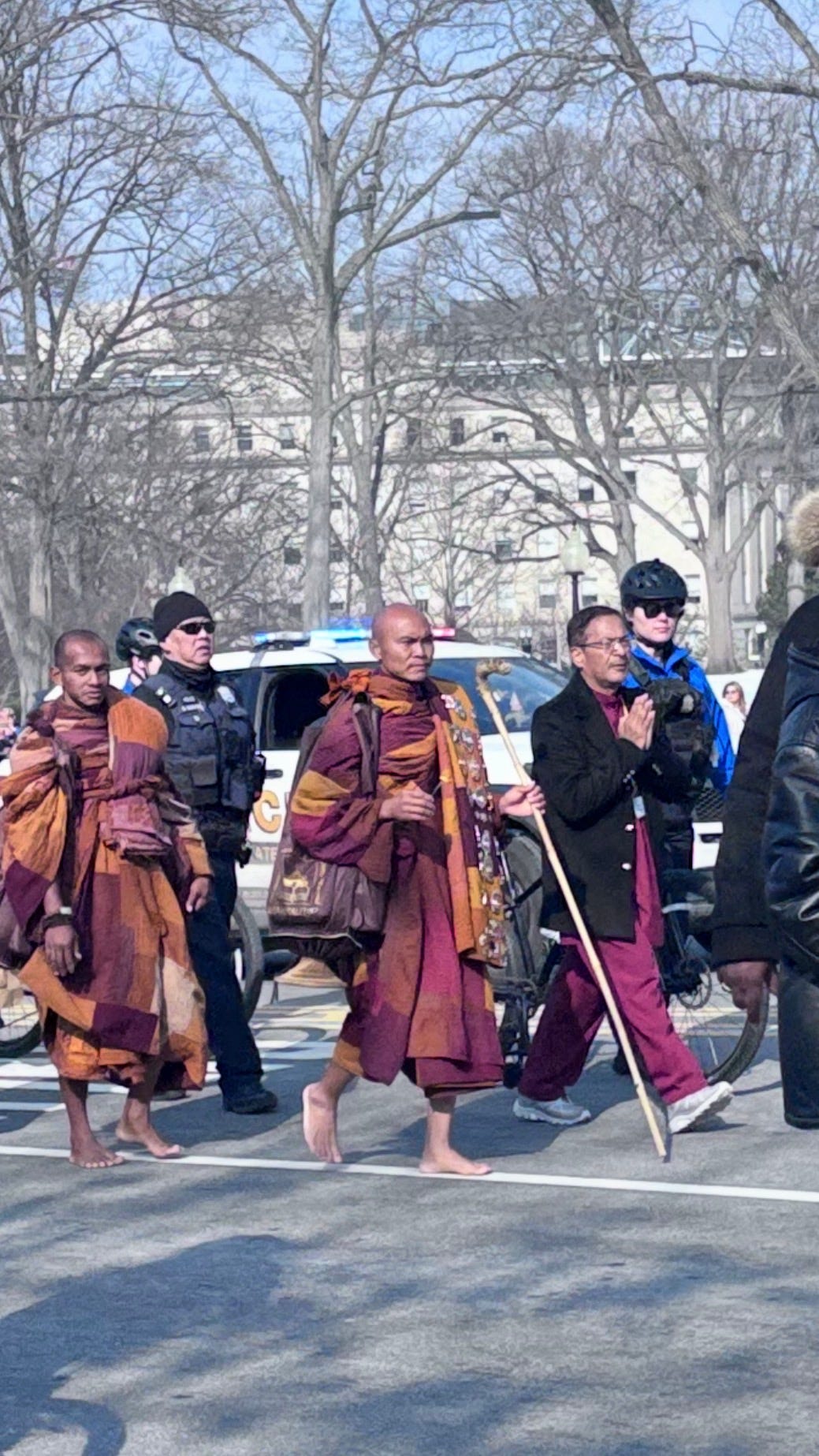
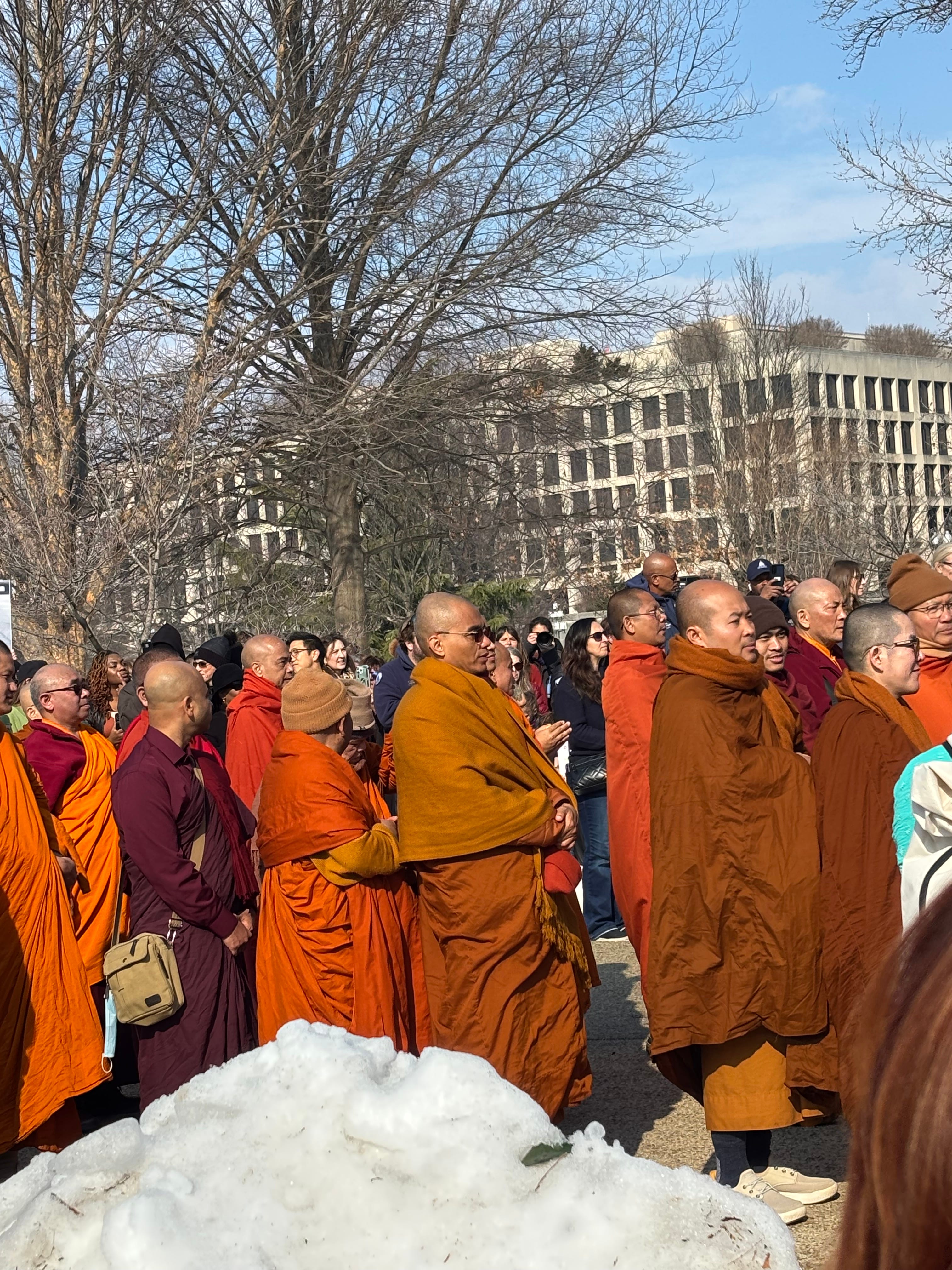
Our country and world seem to be anything but peaceful now. However, in the midst of all the chaos, violence, conflict, and lack of harmony, there are still glimpses of peace. The most prominent example was the recent walk for peace by a group of Buddhist monks from Texas. On a regular workday in my office on Capitol Hill in Washington DC I had the opportunity to go outside and be a quiet witness to the monks arriving in their peace walk destination, our nation’s capital. It was such an honor to see their simple yet profound physical act and representation of peace. The irony wasn’t lost on me that as they walked quietly to spread a message of peace, at the same time an angry and confrontational Congressional hearing was taking place only feet away from the monks inside a Congressional hearing room between the current attorney general and Congressional members. The hearing was anything but peaceful. Yet just outside a group of monks were walking for peace over hundreds of miles. It reminded me that it is still possible to find peace in the midst of chaos around you. And like dropping a pebble into the water, by embracing peace we may create ripples that spread peace wider and farther.
Listening to the words of the lead monk, Venerable Bhikkhu Pannakara, I’m reminded of the importance of finding our own sense of peace and sharing that peace with others. When thinking about changes in our lives and careers and the world around us, chaos, conflict, and disturbances are common experiences. However, if we embrace the words and teachings of Venerable Bhikkhu Pannakara on how to embrace peace for ourselves, it may help us to navigate the life and career changes successfully and achieve our goals.
Key Details on the “Five Seconds for Peace” or “Five Seconds of Mindfulness.”
Definition: It is a brief, intentional pause to stop before reacting, softening before speaking, and choosing care over conflict.
Purpose: The goal is to initiate peace within oneself, which then spreads to families, communities, and the world, fighting against hate, greed, and delusion.
Practice: It involves focusing on breathing in and breathing out, bringing mindfulness to the present moment, even for just five seconds.
Message: Venerable Pannakara emphasizes that peace is not just a big idea but a personal, daily practice, aiming to encourage compassion and harmony in everyday interactions.
Venerable Pannakara describes the “Five Seconds for Mindfulness” for peace includes the following (please see the video link at the end too):
1. First second: Choose Loving-Kindness
2. Second second: Choose Compassion
3. Third second: Choose Love
4. Fourth second: Choose Harmony
5. Fifth second: Choose Hope
As always, I encourage you to reflect on your own stories and experiences with peace, both internal and external. What has peace meant to you in the past with your career and life goals and changes? How do you see peace impacting your current journey and responses to change? Consider ways you can incorporate elements of peace into your life as a tool that empowers you to overcome obstacles to achieving your goals and dreams. As Venerable Bhikkhu Pannakara said, start each day by saying, “today will be my peaceful day,” because as always, Your Story Matters.